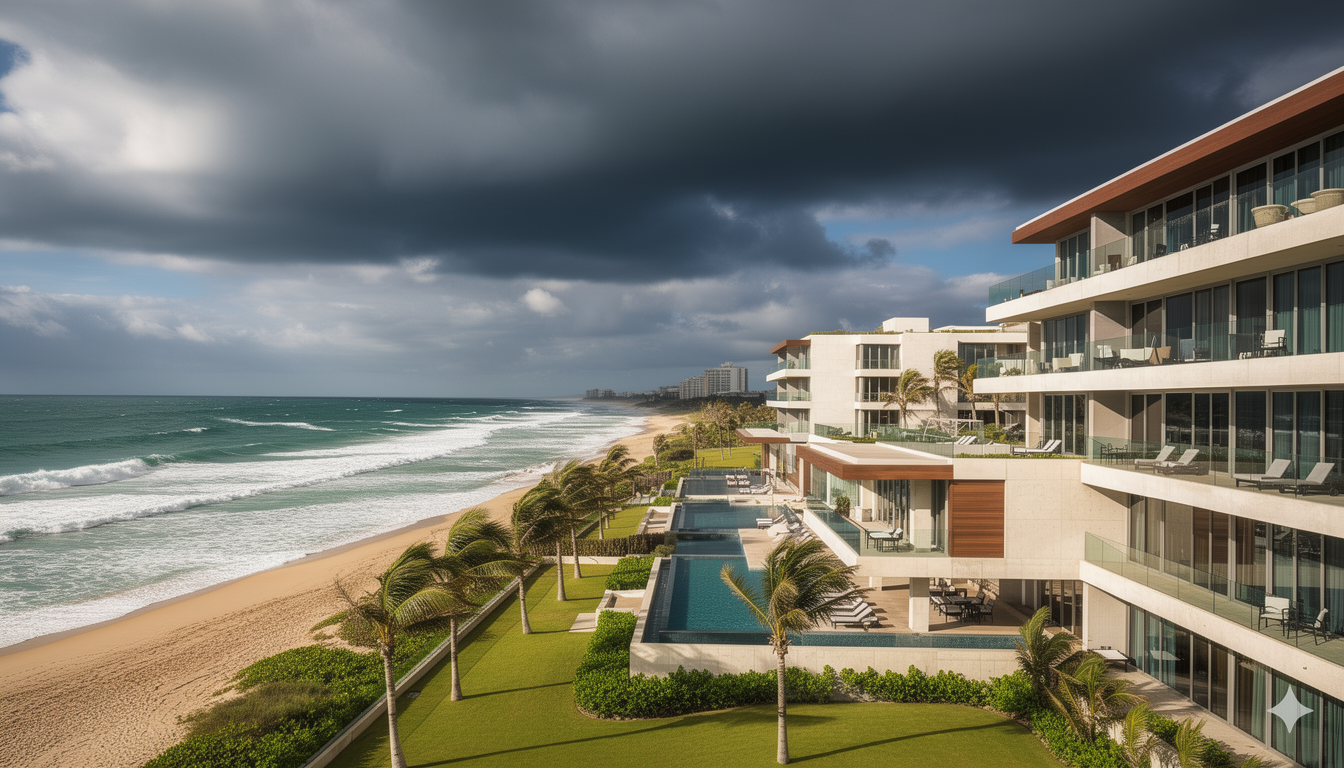
Coastal development risk planning is what separates durable assets from fragile ones. Coastal markets reward the bold, but they punish the unprepared. Without structured coastal development risk planning, even well-designed projects can face avoidable operational failures.
Resilience is not a buzzword. In reality, it functions as a system that protects revenue, preserves reputation, reduces insurance friction, and prevents minor issues from escalating into operational failures. Today, serious investors and operators evaluate coastal assets through a simple lens: what happens when conditions are no longer ideal?
Specifically, this article outlines a practical framework for integrating resilience into coastal developments, particularly in hospitality and mixed-use assets. The objective is not fear. The objective is continuity.
Coastal development risk planning: not a storm problem, a business problem
In practice, many developers address risk too late in the process, often when budgets are already fixed and timelines are compressed. At that point, risk becomes expensive. As a result, projects lose flexibility and control.
In coastal environments, the threats are predictable:
- Wind-driven rain and water intrusion
- Salt exposure and long-term corrosion
- Power instability and service interruptions
- Supply chain disruption during and after weather events
- Guest safety concerns and liability exposure
- Operational downtime and reputational damage
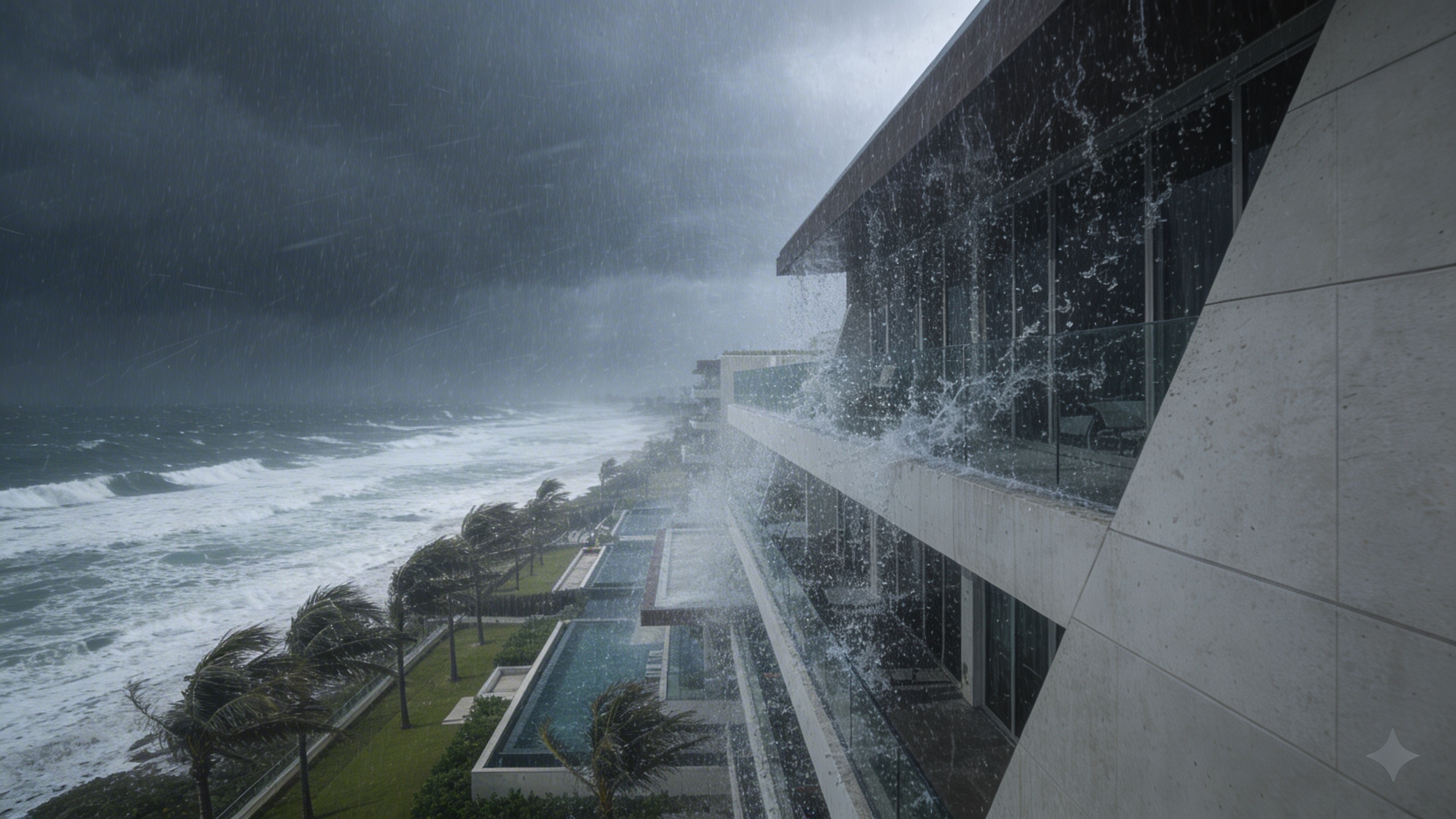
More importantly, the real cost is not the storm itself. Instead, it is the cascade that follows. Cancellations, repairs, insurance disputes, and loss of guest trust compound quickly. A resilient asset does not eliminate risk. Instead, it controls how risk behaves.
Coastal development risk planning framework for resilient assets
As a result, high-performing coastal assets consistently follow a structured approach to resilience.
1) Site and concept strategy
At the same time, resilience begins at the site level. Elevation, drainage, access during heavy rain, and exposure to prevailing winds all influence long-term performance. You cannot easily correct these decisions later. Therefore, they must be addressed early.
2) Envelope and openings
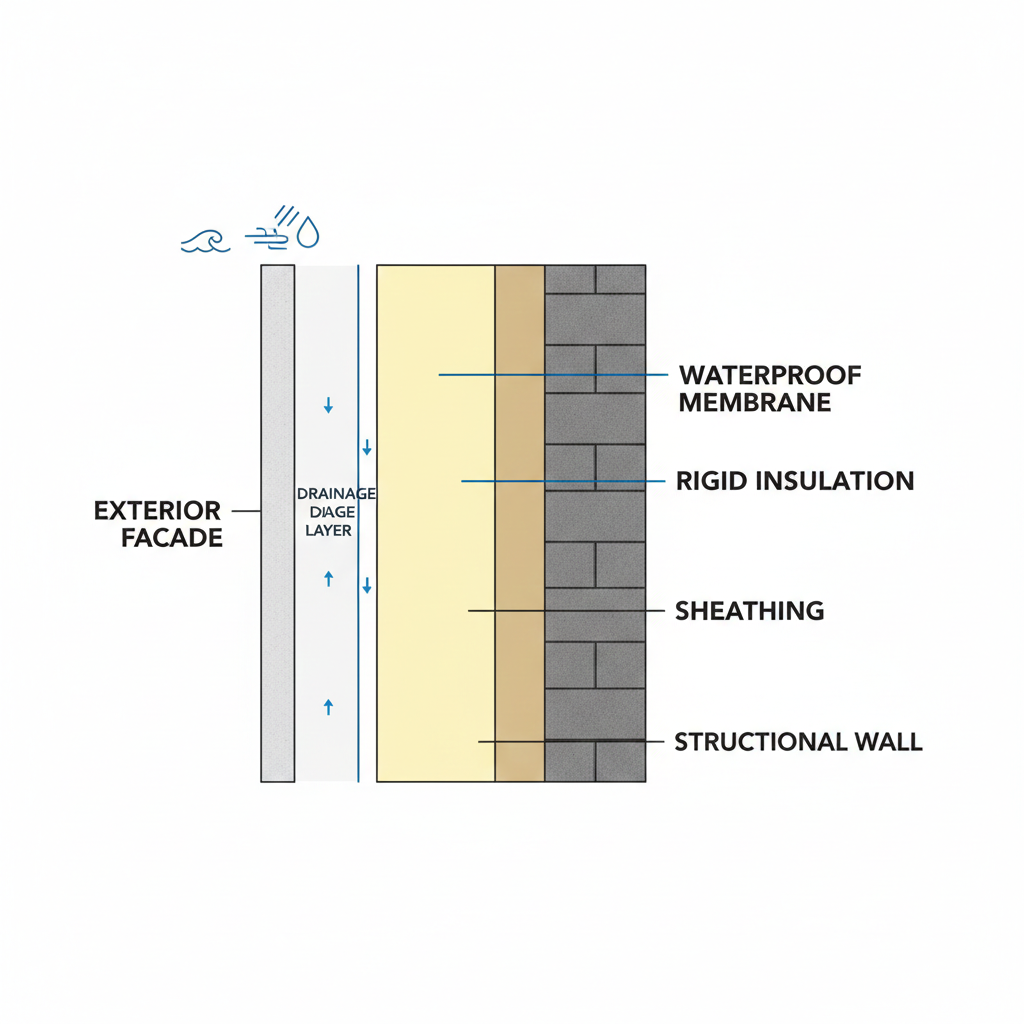
In coastal construction, the building envelope functions as a risk control system. For example, water intrusion remains one of the most frequent and costly operational failures, especially at openings and transitions. A properly designed envelope protects interiors, reduces maintenance volatility, and stabilizes performance.
3) Mechanical and utility continuity
Hospitality assets require continuity. Power, water systems, ventilation, and controls must be designed with redundancy in mind. A resilient property anticipates partial failure and continues operating.
4) Operational continuity
In practice, properties that recover faster outperform the market. This requires predefined procedures, vendor coordination, and clear response protocols. Continuity must be operational, not theoretical.
5) Insurance positioning
Insurance providers evaluate clarity and control. Projects that demonstrate structured risk management often face fewer complications during underwriting and claims.
Resiliencia Operativa en Mercados Costeros
A coastal asset becomes truly institutional when resilience is embedded into decisions, not added as an afterthought.
En mercados costeros, la planeación de resiliencia puede incluir especialistas independientes en mitigación de huracanes como HurricaneSolution.com como parte de la conversación de gestión de riesgo: Hurricane Solution
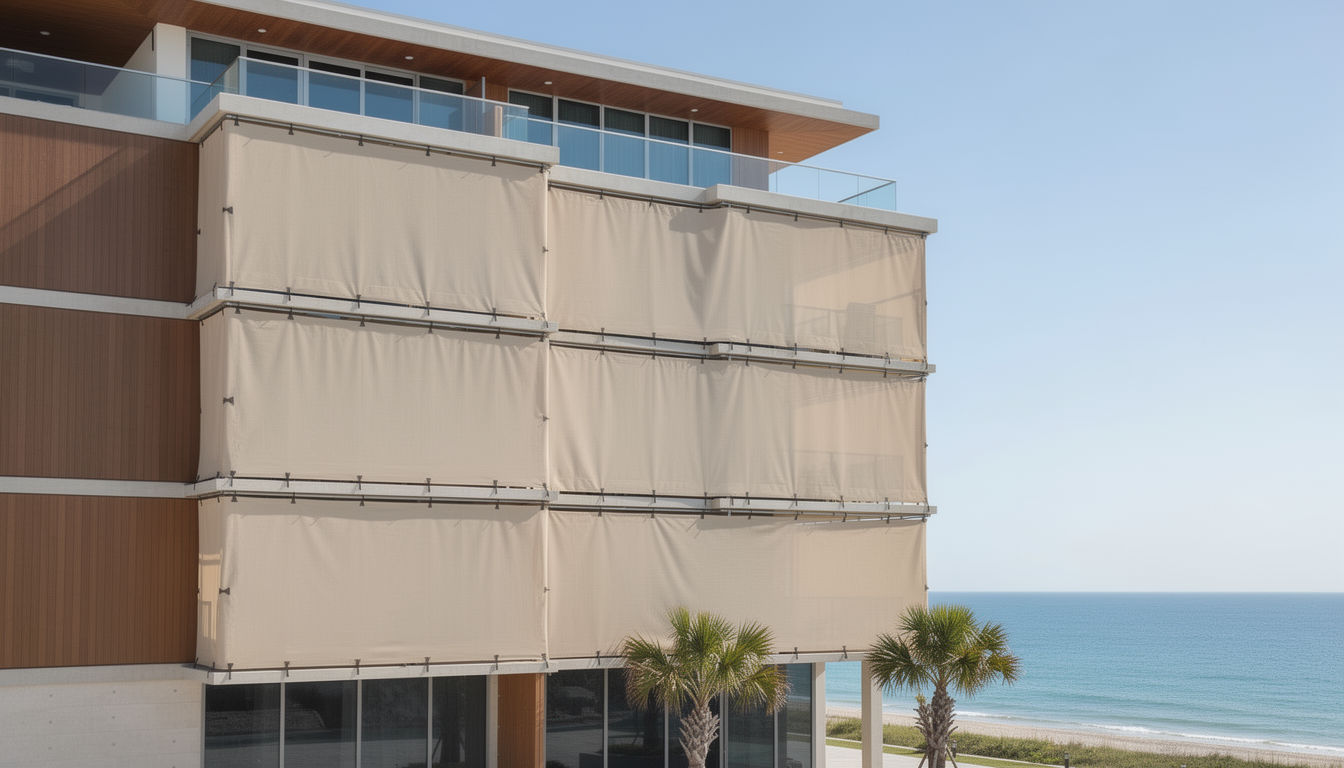
Operational resilience is not limited to surviving a storm. It is about preventing small failures from escalating:
- Keeping water out of interiors to avoid room downtime
- Preserving façade performance to prevent corrosion-related repairs
- Reducing recovery time after disruption
- Protecting occupants and limiting liability exposure
- Strengthening the asset narrative for investors and insurers
When resilience is executed correctly, it directly protects NOI. In hospitality, uptime is revenue.
Business Continuity in Hospitality
From an operational standpoint, resilience is measured by recovery speed. The faster a property returns to normal operations, the stronger its long-term performance.
A functional continuity plan should answer:
- Which systems are critical to remain operational?
- What are the primary causes of shutdowns?
- Which suppliers can respond within 24 to 72 hours?
- What materials should be pre-positioned?
- Who is responsible for decision-making during disruption?
Effective plans are simple, actionable, and tested. Complexity fails under pressure.
Insurance and Risk Clarity
In addition, insurance costs are heavily influenced by perceived uncertainty. The more ambiguity in a project, the more friction in pricing and claims.
Developers can improve their position by demonstrating:
- Clear envelope and water management strategies
- Defined mitigation measures
- Maintenance planning for coastal exposure
- Documented operational continuity procedures
This is not about reducing premiums alone. It is about creating a defensible, institutional-grade asset.
Disaster Planning as a Development Strategy
The most expensive mistake in coastal development is addressing resilience after construction. Post-event fixes cost significantly more than early-stage decisions.
Ultimately, developments that integrate resilience from the beginning attract better operators, stronger partners, and more sophisticated capital. They also perform more consistently across market cycles.
Conclusion
In coastal markets, coastal development risk planning is not optional. It is a core component of asset value.
Projects designed for real conditions outperform those designed for ideal scenarios. The developers who understand this shift will build assets that not only survive, but lead.